
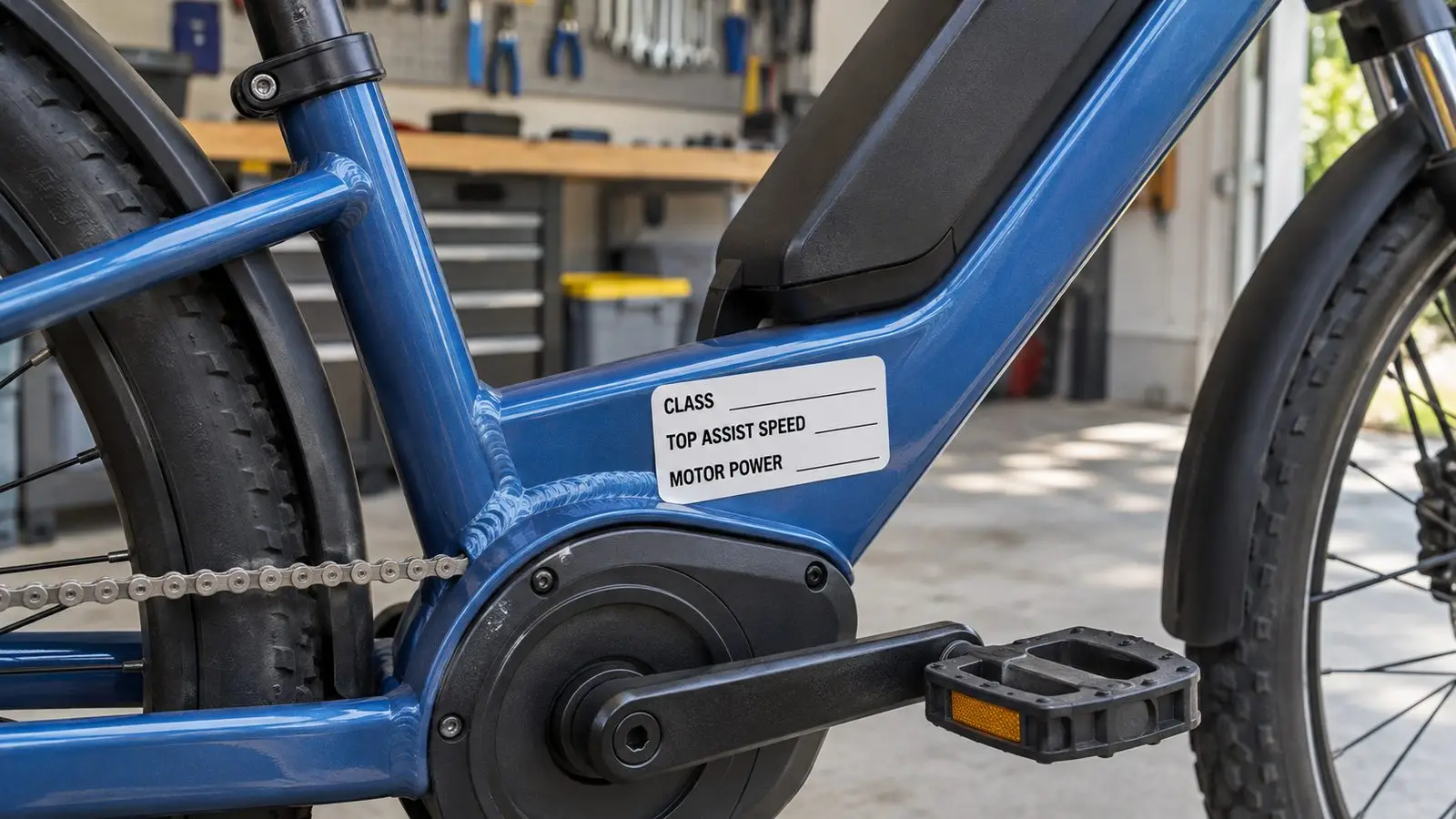
Most state e-bike laws sort e-bikes into three classes, and the class decides where you may ride and how old you must be. Many bikes carry a label with the class. If yours does not, or you are not sure, three questions are enough to find it.
The three classes in one minute
- Class 1: the motor helps only while you pedal and stops helping at 20 mph.
- Class 2: the motor can move the bike without pedaling (a throttle) and stops helping at 20 mph.
- Class 3: the motor helps only while you pedal and stops helping at 28 mph. Class 3 bikes usually need a speedometer.
Most three-class laws also cap the motor at 750 W. That is how California Vehicle Code 312.5 defines them, and many states use the same wording; our state law summaries show where they differ.
Find your class
Uses the three-class definitions most state laws share: Class 1 helps only while you pedal and stops at 20 mph; Class 2 can move the bike without pedaling and stops at 20 mph; Class 3 helps only while you pedal and stops at 28 mph; motor 750 W or less (for example California Vehicle Code 312.5). Some states use other definitions. If your bike has several modes, check each mode. Version 1.0.
Bikes with several modes
Some bikes can be switched between classes. Lectric, for example, says the XP4's riding modes cover Class 1, 2 and 3. The rules that apply are the ones for the mode you ride in, so check the label and the manual for each mode.
Changing the speed changes the class
Raising the assisted top speed can move a bike into another class or out of the e-bike category. Connecticut, for example, requires anyone who changes an e-bike's speed or motor engagement to remove or replace its class label, with fines for breaking that rule (Conn. Gen. Stat. 14-289l). See the Connecticut summary.
Next step: check the rules for your class with the state rules finder.
Sources. Class definitions as summarized on our California e-bike laws page (California Vehicle Code 312.5) and Connecticut page; Lectric XP4 riding modes from Lectric's product page. Checked November 28, 2026. Not legal advice.